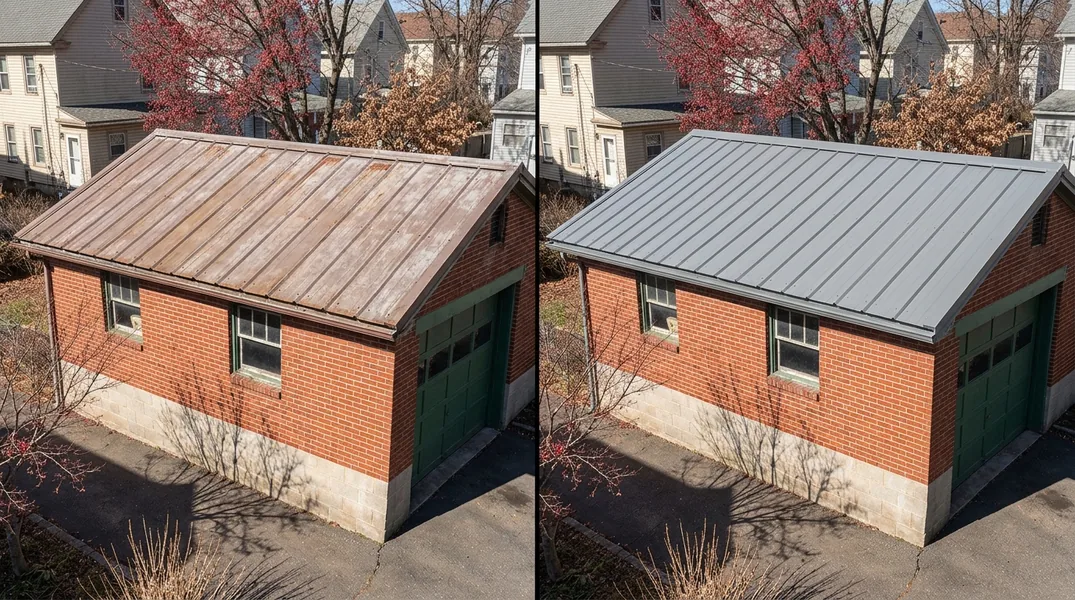
Why Paterson Winters Are Tough on Any Roof
If you live in Paterson, you already know the routine: a nor'easter dumps eight inches of wet snow, the temperature climbs to 38 degrees the next afternoon, then plunges back into the teens overnight. That freeze-thaw rhythm is repeated dozens of times between December and March, and it is the single biggest reason roofs in our area fail early. Asphalt shingles absorb moisture at their edges, ice creeps under flashing, and by the time you notice a stain on the ceiling, the damage has been building for seasons.
Metal roofing behaves differently in this climate, and that difference is not marketing talk. It comes down to how the material sheds water, how it handles thermal movement, and how it interacts with the freeze-thaw cycle. For homeowners comparing roof options in Passaic County, understanding those mechanics is the best way to make a decision you will not regret in five years. This article walks through what actually happens on a metal roof during a Paterson winter, including the parts most homeowners never hear about until something goes wrong.
Metal Roof Snow: Why It Sheds Instead of Sitting
The phrase metal roof snow gets searched a lot every January, and for good reason. Metal is one of the smoothest roofing surfaces available, so snow does not grip it the way it grips granular asphalt. On a steep slope, accumulated snow tends to slide off in sheets once sun hits the panels or the temperature rises slightly. That means less standing weight on your structure, fewer hours of snowmelt sitting against your shingles, and a much lower chance of water backing up under the roof edge. For older Paterson homes with 2x6 rafters and decades of load history, that reduced snow load is a real structural benefit, not just a convenience.
There is a catch, though, and it is the one honest installers will tell you about up front. Snow that sheds fast can land in a heap on a walkway, a shrub bed, or right over the front door. That is exactly why snow guards metal roof systems exist. Snow guards are small brackets mounted in rows across the lower portion of the roof. They do not stop snow from shedding; they break it up into smaller pieces and slow it down so it lands in a controlled way. On a Standing Seam Metal Roofing installation, snow guards are usually specified above entryways, driveways, and any area where falling snow could injure someone or damage landscaping. Skipping them is the most common regret we hear from homeowners who had a metal roof installed by someone unfamiliar with Northeast winters.
Ice Dams and Metal Roof Winter Performance
An ice dam roof problem starts with heat, not snow. When warm air leaks from your living space into the attic and heats the roof deck, snow melts near the ridge, runs down to the colder eaves, and refreezes. Over time that refrozen band grows into a dam, and the water behind it backs up under shingles, through flashing, and into your ceilings. Metal roofs do not magically eliminate ice dams, because ice dams are fundamentally an insulation and ventilation problem. What metal does do is reduce the opportunity for water to infiltrate once a dam forms. Standing seam panels have raised seams and concealed fasteners, so there are far fewer penetration points where water can find a path inside compared to a shingle field full of nail heads.
The other half of the equation is the surface itself. Metal sheds meltwater quickly, so water does not linger at the eaves the way it does on textured shingles. Combined with proper attic insulation and intake and exhaust ventilation, a metal roof winter in Paterson tends to produce smaller, shorter-lived ice dams rather than the thick, heavy dams that plague aging asphalt roofs. If you already have chronic ice dams, a Metal Roof Replacement is a good moment to also address attic air sealing, because the roof and the insulation work as a system. A reputable installer will flag that during the assessment rather than just selling you panels.
Freeze-Thaw Cycles: Where Metal Quietly Wins
Freeze-thaw is the slow killer of Northeast roofs. Water seeps into a tiny crack or under a lifted shingle tab, freezes overnight, expands, and pushes the material apart a little more each time. Asphalt shingles are vulnerable because their granular surface and overlapping tabs trap moisture. Wood shakes are even more exposed. Metal panels, by contrast, are impervious to moisture absorption. They do not swell, they do not rot, and they do not delaminate when water freezes against them. The paint finish on a quality metal panel is engineered to flex with the metal as it expands in the sun and contracts in the cold, which is why a well-installed metal roof can handle decades of Paterson winters without the surface breaking down.
Thermal movement is real, and it is why installation details matter more than the panel itself. Fasteners, clips, and flashing must allow the metal to move slightly without creating gaps. That is the kind of work a local crew does every week and a traveling crew may not. If you are searching for metal roof installation near me in the Clifton or Totowa area, ask how the installer handles thermal movement at seams and penetrations. The answer tells you more about the finished roof than the panel color ever will.
Metal Roof Over Shingles: A Winter-Smart Retrofit
Many Paterson homes still have a first layer of asphalt shingles that is nearing the end of its life. Homeowners often assume a full tear-off is the only path, but a Metal Roof Over Shingles (Retrofit) is a legitimate option when the existing deck is sound and local code allows it. A retrofit adds a layer of underlayment and then the metal panels over the old roof, which saves on disposal costs and shortens the project timeline. From a winter performance standpoint, the extra layer can modestly improve the roof's thermal buffer, though it is not a substitute for attic insulation.
The retrofit decision should be made after a proper inspection, not over the phone. The installer needs to check decking condition, flashing details, and whether the existing structure can carry the added weight (metal is typically lighter than the shingles it covers, but the calculation still matters). If you want a straight answer about whether a retrofit makes sense for your home, the fastest path is to request a free estimate and have someone walk the roof with you. Paterson Metal Roofing serves homeowners across the city and surrounding towns, and the assessment includes a clear explanation of what your roof actually needs before winter arrives.
Metal Roof Winter Maintenance and When to Call a Pro
One of the underrated benefits of a metal roof in a Northeast climate is how little winter maintenance it requires. You do not need to rake snow off the roof, you do not need to worry about shingle granules clogging gutters, and you do not need to climb a ladder after every storm to check for missing tabs. Gutters still need clearing, and snow guards should be inspected once a year for loose brackets, but the roof surface itself is largely self-sufficient. That said, no roof is maintenance-free, and it is worth having a professional look at flashing, seals, and snow guard attachments every few years, especially after a season with heavy ice.
If you are seeing icicles hanging from the eaves, water stains on the ceiling, or snow that piles up instead of shedding, those are signals to get an expert opinion before the next freeze. A short inspection now is far cheaper than emergency repairs in February. You can reach Paterson Metal Roofing at (973) 333-4969 to schedule a visit, or use the online form to request a free estimate. For homeowners weighing options, it also helps to review pricing ranges ahead of time so the conversation starts on solid ground. A metal roof is a long-term investment, and in a climate like ours, the winter performance is where that investment earns its keep.
Looking for a professional metal roofing contractor in Paterson? Paterson Metal Roofing responds fast for all your metal roofing needs.
Get a Free QuoteOur services: Metal Roof Installation · Standing Seam Metal Roofing · Metal Roof Replacement